
April 10, 2026
Why Old Growth Forests Need Buffers
by Marshall Buchanan, Registered Professional Forester and Tree Canada Coach
Most urban woodlots are fragments of what was once a large forest, covering hundreds or thousands of hectares. Large forests provide a special type of habitat which is called "interior forest habitat", also known as the heart of the forest. But the edge of a forest is quite different from the interior. The edge is exposed to the elements whereas the interior is sheltered. These differences are critical to wildlife, as the species most at risk are the ones that require sheltered, shady, multi-layered dense forest canopies with higher humidity, less wind and more stable environmental conditions all-round. In contrast, the edge of a forest experiences dramatic shifts in temperature and humidity where it can be very sunny, dry and windy. Research suggests that the "edge effect" extends about 100 metres into the forest. So if a woodlot is small, it may have little or no interior forest habitat and less of it would be good quality. Adding 100 metres of new forest around a woodland greatly increases its ability to offer critical ecological services like providing unique wildlife habitat.
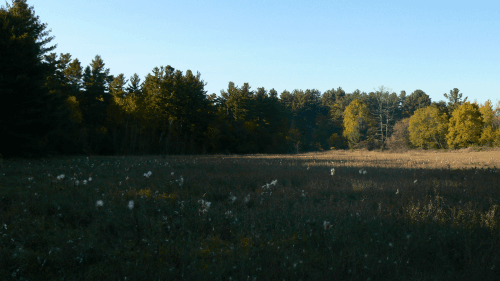
Another important role of a forested buffer is to reduce the destructive force of high winds on the forest core. Old growth forests are at high risk of being damaged by strong winds, because the trees are mature and therefore already close to their maximum height. White pine is the tallest tree in eastern Canada and Gillies Grove in fact contains the tallest white pine in Ontario. So the old growth pines are in fact at very high risk of being mortally wounded in a Derecho event. If the green tops of the trees (essentially what foresters call the "live crown") break off, these old growth white pines will die. Even if only a small portion of the live crown breaks off at the very top, the ability of the tree to produce pine cones will be severely reduced and the chance to get viable white pine seed that embodies the genetic wealth of The Grove will be lost. Unfortunately, climate change is making the likelihood of severe wind storms ever more common.
Together we can find a better way!