
October 20, 2026
Grove Rove Review: August 2026
Walking Through Arnprior’s Living Landscape with Philip Powell
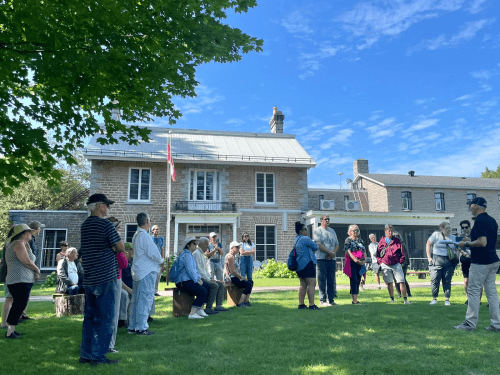
During August’s Grove Rove, we had the pleasure of learning about the heritage of important families and early buildings which shaped the landscape and town of Arnprior.
The confluence of the Madawaska and Ottawa Rivers was carved out by the Laurentide Ice Sheet and then the Champlain Sea. As the waters receded and lakes and rivers were connected across the Canadian Shield, humans began to settle in the fertile Ottawa Valley. The Algonquin peoples lived across the entire Ottawa River watershed and used the waterways extensively. Eventually, settlers came from the east, and the landscape was altered forever.
The next major figure was Daniel McLachlin, whose lumber operations helped transform a struggling settlement into the Town of Arnprior. McLachlin acquired land here in 1851 and later made the property known as “The Hill” (now the Galilee Centre) his family estate. His wealth came from the vast white pine forests of the Ottawa Valley, but his legacy includes a fascinating contradiction. In the 1870s, this prominent lumberman deliberately protected part of his property from logging. That decision helped preserve the forest we now know as Gillies Grove.
The McLachlin family landscape extended well beyond The Hill. Daniel and Maria McLachlin’s daughter Jessie and her husband, John Usborne, lived at Edgewood, a grand Victorian home surrounded by extensive orchards, gardens and vineyards on land overlooking the Ottawa River. The property eventually passed to the Town and became a public park, later named Robert Simpson Park.
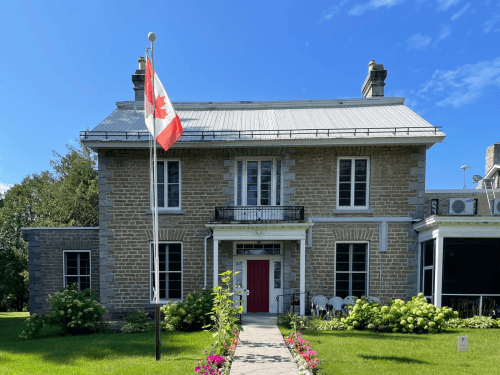
The walk continued back through Galilee, tracing the transformation of The Hill from the McLachlin family estate to an Oblate novitiate and eventually today’s Galilee Centre. The group then crossed the Meadow, entered Gillies Grove and had the opportunity, thanks to the current owners, to see the Gillies Mansion.
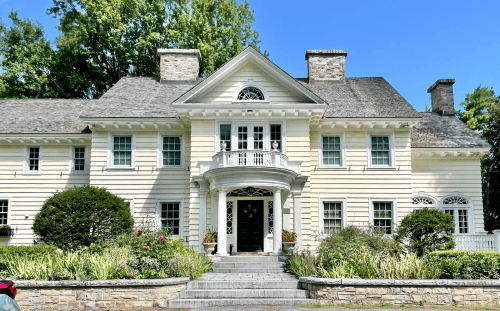
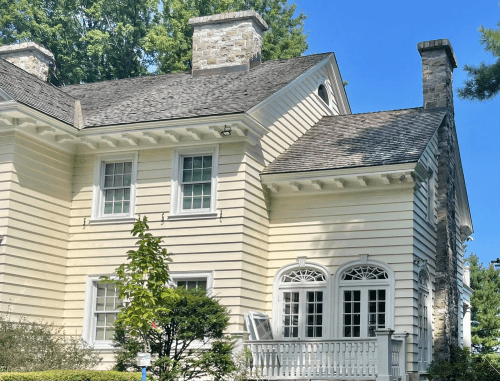
After the McLachlin property was divided, lumberman David Gillies acquired The Grove. Like McLachlin before him, Gillies chose to preserve the forest. In 1937 he built the impressive Colonial Revival Gillies Mansion within it, using white pine extensively to showcase the products of the Gillies lumber business while deliberately keeping the surrounding landscape largely undisturbed.
That produced one of the central messages of the Grove Rove: Two of the Ottawa Valley’s great lumber families owned this forest, and both made decisions that helped preserve it.
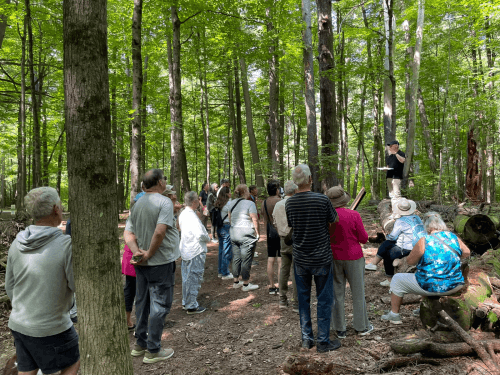
The Grove survived again when, generations later, community members rallied to protect it from development. Their efforts, together with the involvement of the Nature Conservancy of Canada and others, helped ensure that its magnificent old-growth white pines would remain. Today, Gillies Grove and House are recognized as a National Historic Site.
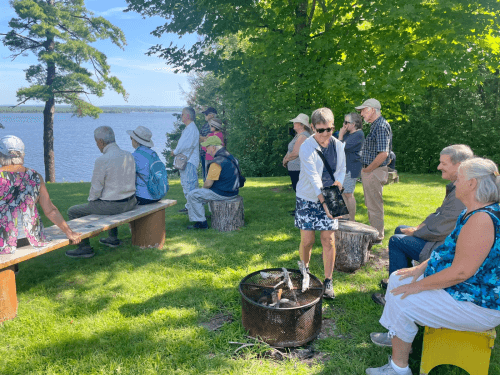
The final stop was the Meadow, where the group looked not backward, but forward.
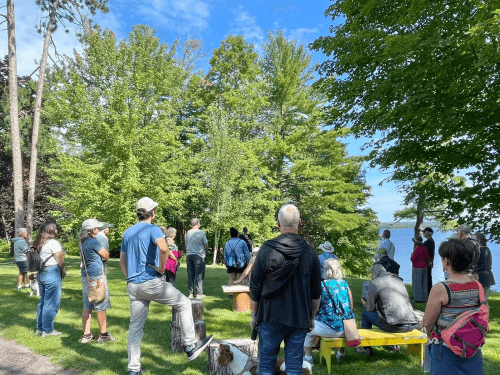
The Grove Rove demonstrated that this landscape has never been static. Indigenous peoples, settlers, lumber families, religious communities and generations of Arnprior residents have all had relationships with it. The landscape has changed repeatedly.
But throughout that history, people have also made conscious choices about what should remain. That leaves our generation with the same responsibility.
Every generation changed this landscape. And every generation left something behind. What will we leave for the next one?
Together we can find a better way!